Oh how I delight in this chapter of the apostle John.
1 John 3:3–5 declares a truth that cuts through every false doctrine and every compromise with sin:
The standard of purification is clearly defined: “just as He is pure.”
And how is Jesus pure?
Without sin. Without stain. No sin at all. Zero sin.
Therefore, the Christian who has the hope of eternal life purifies himself in the same way. This is not a symbolic purity, nor a relative one, nor a purity that tolerates occasional failure. It is a real, active, lived purification, resulting in a life of integrity and holiness that reflects true belonging to Jesus Christ as Lord and King.
John continues by affirming that Jesus was manifested to take away sins, and in Him there is no sin. Christ did not come to manage sin, excuse sin, or coexist with sin—He came to destroy it. Where this truth is fully lived, there is no place for occasional sin. No occasional thought. No occasional act. No occasional compromise. The heart is firmly established to do the will of God.
A heart that belongs to Christ does not negotiate with sin. It is settled, fixed, and determined to obey God fully.
John goes even further:
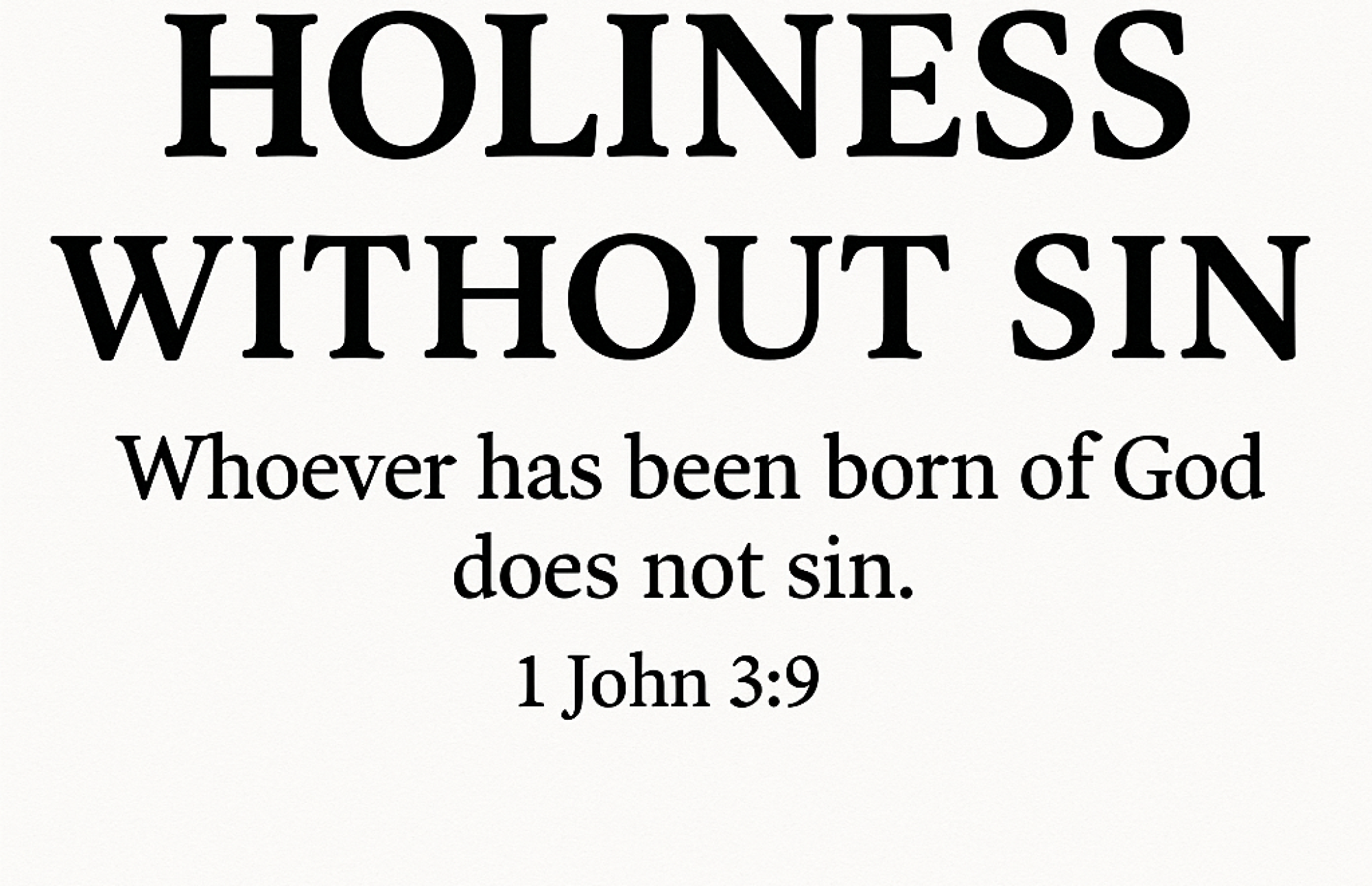
“Whoever is born of God does not sin.”
This statement is absolute. The verb poieō refers to sin itself, not merely a “habitual pattern” as Pentecostal, charismatic, and evangelical movements falsely claim. John is not redefining sin; he is declaring the reality of the new birth. One who is born of God does not commit sin at all. His conscience is pure and mature, cleansed, firm, and established in righteousness.
The attempt by evangelical, Pentecostal, and charismatic movements to reduce this passage to “habitual sin only” is a deception. John is not speaking about frequency; he is speaking about the presence of sin itself. To twist this text is to empty it of its power and to deny the victory Christ purchased.
The one who is born of God lives a life where sin no longer reigns, because the seed of God remains in him. His life testifies that the works of the devil have truly been destroyed in him.
This is not theory. This is Christian reality.
1 John 3:3–9 The Absolute Standard: Never Sin
“And everyone who has this hope in Him purifies himself, just as He is pure.”
The Christian who truly possesses the hope of eternal life actively purifies himself. The model is not other believers, not human weakness, but Jesus Himself.
And how is Jesus pure? The answer is given plainly in verse 5.
1 John 3:5
“And you know that He was manifested to take away our sins, and in Him there is no sin.”
Jesus is pure because there is no sin in Him at all—zero sin, never sin.
Therefore, the purification mentioned in verse 3 is not symbolic, partial, or progressive tolerance of sin. It is purification unto the same moral reality: a life without sin.
This is the Christian calling: to never sin, as Christ never sinned.
1 John 3:4
“Whoever commits sin also commits lawlessness, and sin is lawlessness.”
Here John defines sin precisely:
Sin is the conscious, willful transgression of the Law of God. This is what we call “sin”
Sin is not weakness, not limitation, not temptation—it is a deliberate act of rebellion against God’s Law.
We are not talking about being without temptations but as Jésus was as it written in Hébreuw 2 :19 we can be alors without sin.
Hebrew 5:14-15
This definition leaves no room for “occasional sin” as a normal Christian experience.
1 John 3:6
“Whoever abides in Him does not sin. Whoever sins has neither seen Him nor known Him.”
This statement is absolute.
To abide in Christ is to live in a state where sin no longer occurs.
John does not say “sins less,” “sins occasionally,” or “sins but is forgiven.”
He says plainly: does not sin.
To continue in sin even occasionally is evidence of not truly knowing Christ.
1 John 3:7
“Little children, let no one deceive you. He who practices righteousness is righteous, just as He is righteous.”
John issues a warning because deception exists.
True righteousness is not positional only; it is practiced.
And the standard again is clear: just as He is righteous.
Jesus’ righteousness contains no sin at any time.
Therefore, the one who is truly righteous does not sin, never sin.
1 John 3:8
“He who sins is of the devil, for the devil has sinned from the beginning. For this purpose the Son of God was manifested, that He might destroy the works of the devil.”
Sin belongs to the devil’s domain.
Christ did not come to manage sin, cover sin, or tolerate sin
He came to destroy the works of the devil.
If sin continues even occasionally then the devil’s work has not been destroyed in that area.
But whoever abides in Christ experiences that destruction.
1 John 3:9
“Whoever is born of God does not commit sin, for His seed remains in him; and he cannot sin, because he has been born of God.”
The Greek expression here (ou dynatai hamartanein) is a strong negation.
It does not mean “does not usually sin.”
It means does not sin at all.
Why?
Because God’s seed remains in him.
The new birth produces a new nature, oriented toward holiness, obedience, and purity.
This is not a temporary condition. It is a permanent state.
The one born of God does not sin never sin because the life of God within him keeps him in holiness.
Conclusion
1 John 3:3–9 presents one clear, uncompromising truth:
Jesus is without sin.
The Christian is called to be like Him.
Sin is lawlessness, not weakness.
Christ came to destroy sin, not coexist with it.
Whoever abides in Christ does not sin.
Whoever is born of God never sins.
Any teaching that normalizes occasional sin contradicts this passage and empties the new birth of its power.
The will of the Father is clear:
“Never sin” is not extremism it is the biblical norm that deosn’t match with the experience of the humain being.
But it différent with, he who has been born of God and who has the Spirit of God.