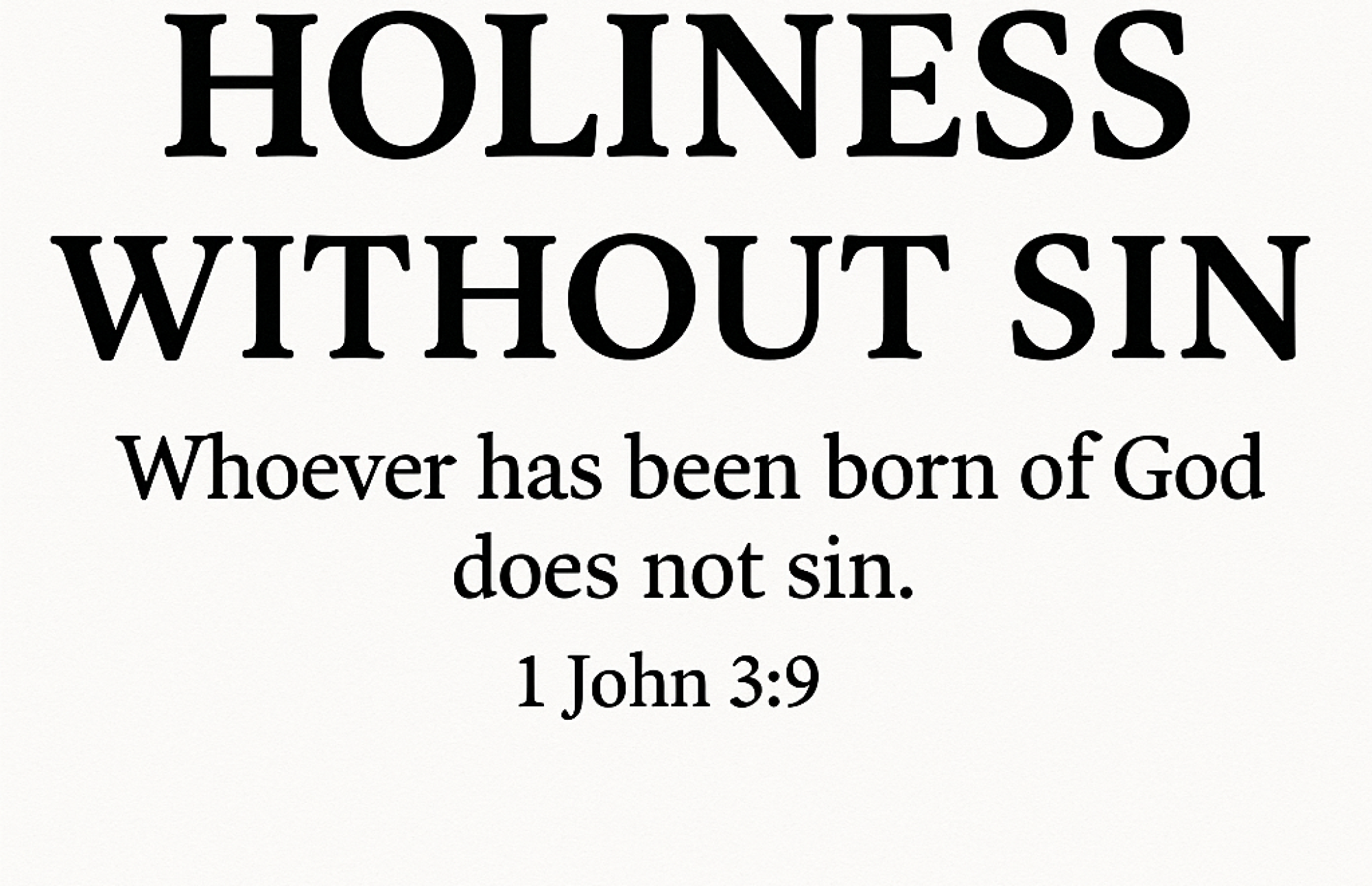
Paul does not separate faith and fidelity: for him, true faith necessarily leads to active fidelity. These two dimensions are inseparable:
Faith implanted initiates the relationship with God as trust in His salvation.
Faithfulness is the logical and visible holy growth in the
behavior of the believer.
Therefore, in Paul, pistis encompasses both aspects: an inner faith in God and an active fidelity that reflects that faith. The context determines which aspect is emphasized, but the two remain deeply linked.
When Paul takes up the verse from Habakkuk 2:4 “The just shall live by faith” – in Romans 1:17, he relies on the original Hebrew text where the word הָנָוָּמ ֱא) emunah) designates above all fidelity or loyalty to God and his Law. This Old
Testament passage emphasizes the constancy of the just in his
obedience to the divine commandments and his
perseverance in the face of trials.
This is not simply an abstract or passive faith, but an active and committed fidelity in a life in conformity with the will of God.
However, Martin Luther, in his interpretation of Romans 1:17, read this verse through a different lens, influenced by his own spiritual experience and his theology of justification by faith alone (sola fide). Luther wrote, “I began to understand that the righteousness of God means the righteousness that God
gives through faith.”
According to him, this passage means that the believer’s righteousness comes entirely from God and not from his own actions, and that faith is only a passive
act of trust in the work of God.
The passage from Romans that Luther uses as the basis of his doctrine “The just shall live by his faith” (Romans) is misinterpreted and decontextualized. In its original context, this verse speaks of the forgiveness of sins that the believer receives by forsaking his sins.
Practical faithfulness: In Habakkuk, the righteous man who lives by faith, taken up by Paul and falsified by Luther, is the one who perseveres in righteousness and holiness in the face of the attacks of the enemy, demonstrating his faithfulness to God by his obedience.
This faithfulness is translated by a life in conformity with the divine Law, because “Not everyone who says to me, Lord, Lord, will enter the Kingdom of Heaven, but he who does the will of my Father.” (Matthew 7:21).
This reading, although central to the Reformation, distorts the connection between Paul and the prophet Habakkuk. In reality, Habakkuk 2:4 emphasizes the personal righteousness of the believer, a righteousness that is manifested in constant fidelity and loyal obedience to the Law of God. The righteous,
in the Hebrew perspective, is the one who lives a harmonious
relationship with God through his practical fidelity, expressed in his way of acting.
The word πίστις (pistis), used by Paul in Greek, cannot therefore be reduced to a purely passive faith, as Luther understood it. It also includes this notion of active fidelity.
In Romans 1:17, Paul aligns himself with the Hebrew view by emphasizing that the faith (pistis) of the justified believer is not a simple trust in God, but a living relationship that is expressed in faithfulness and obedience.
Paul does not oppose faith to the Law, but shows that true faith leads to
practical faithfulness, to a righteousness lived out in daily life.
This righteousness is not only a gift received passively, but
also an active and constant response to God’s grace, by remaining faithful to his commandments.
Galatians 3:11 And that no man is justified by the law in the sight of God, it is evident: for, The just shall live by faith.
Paul here asserts that initial justification, that is, forgiveness of sins and entry into relationship with God, cannot be obtained by works of the Mosaic Law. He cites Habakkuk 2:4 to emphasize that faith always with faithfulness has always
been essential to salvation, even in the Old Testament.
However, this does not mean that the moral Law is abolished or that obedience becomes secondary.
What Paul rejects:
Paul opposes a legalistic understanding of the Law, where rituals and outward practices (such as circumcision) were seen as means of justification. The Law, in its condemning role, reveals sin and shows the need for a Savior (Galatians
3:24).
In this sense, it does not justify, but leads to Christ.
This living faith produces works of mercy as well, as James 2:26 states: “Faith without works is dead.”
Paul is not saying that the Christian life can ignore obedience to the moral law. On the contrary, once justified, the believer is called to walk in righteousness and produce ripe fruits of holiness (Galatians 5:22-23). Thus, initial justification by faith opens the way to a life of total, obedience without sin that
precedes eternal life.
Paul establishes a vital truth: “The just shall live by faith” (Habakkuk 2:4). This means that righteousness and forgiveness of sins cannot be obtained by works of the law, but only by faith in God, especially in Christ.
Faith is based on the redemptive work of Jesus. This faith rooted in the heart of the beliver leads that produces willing obedience motivated by love, not by legal compulsion.
If it is motivated by love, it reaches its stage of full development without sin for final salvation. The moral Law of God takes on another dimension, fused in love, it takes on its full authentic and original meaning.
The book of Galatians deals with Christian freedom by showing that, although the Law had a temporary function to reveal sin and maintain, to some degree or another, obedience to God outsidly, it now takes on a more spiritual and interior dimension for believers in Christ. Paul insists that, through faith
in Jesus Christ, the Christian is freed from the legalistic and condemnatory framework of the Law, where obedience was a simple matter of external rules.
From now on, the Law is experienced not as a burden of sanctions, but as an expression of love and interior obedience, following the example of what
Jeremiah prophesied: God will write His Law in the hearts of His people. Freedom in Christ does not annul the Law, but transforms obedience or the moral Law into an expression of interior justice, lived in total holiness without sin, guided by divine love and grace in order to complete salvation.