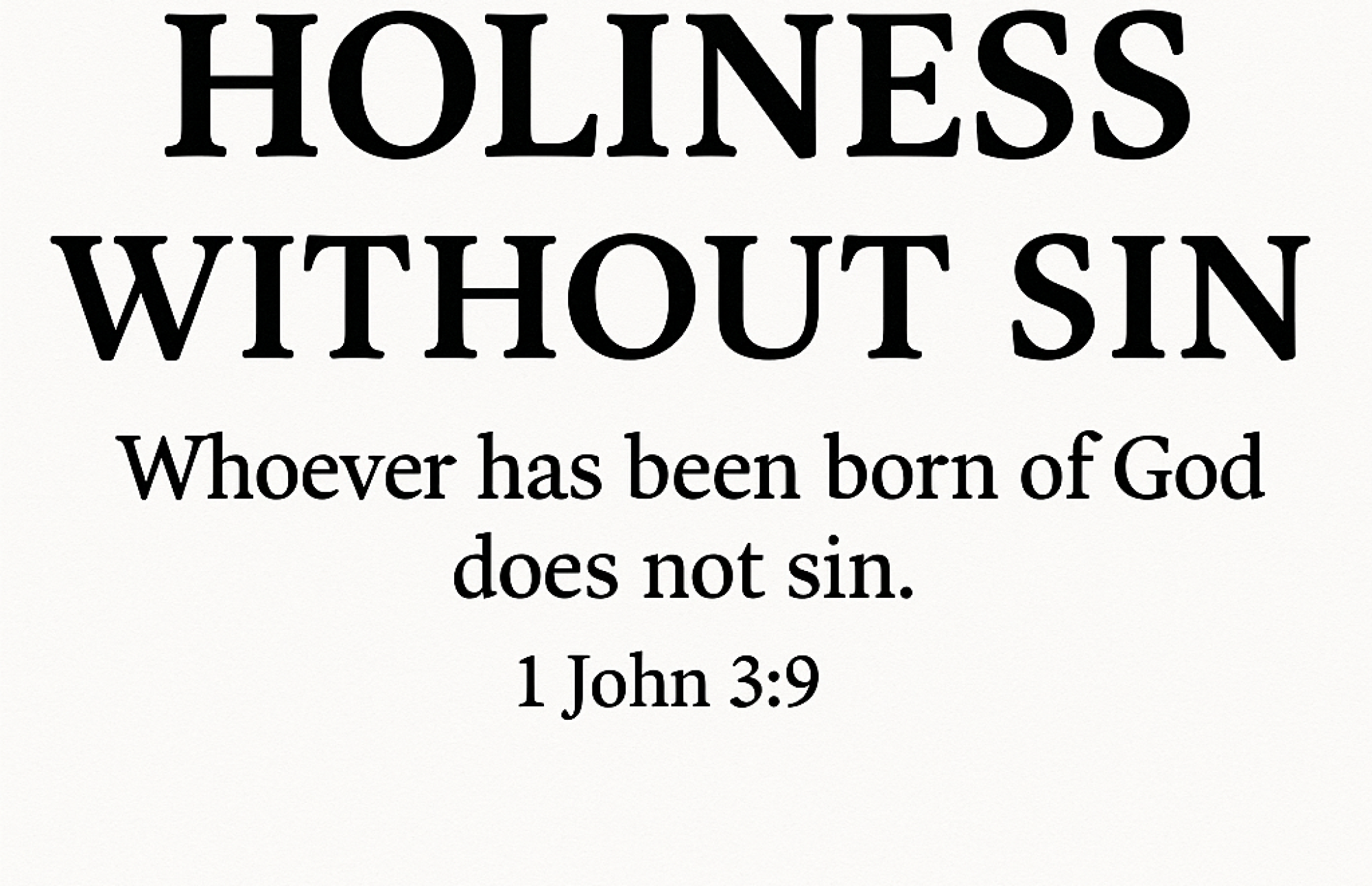
1 Thessalonians 5:22–24 contains one of the clearest and most glorious promises of the New Testament concerning sanctification and holiness:
“Abstain from every form of evil. And the very God of peace sanctify you wholly; and I pray God your whole spirit and soul and body be preserved blameless unto the coming of our Lord Jesus Christ. Faithful is He that calleth you, who also will do it.”
Paul does not call believers to avoid some sins or obvious sins, but every form of evil. This expression leaves no room for compromise, no exception, and no theological escape. Every form of evil includes every kind of sin, every temptation, every inward inclination, every sinful thought, desire, imagination, attitude, word, or action that may attempt to assault the soul. Nothing that comes from sin is tolerated. Not occasionally. Not temporarily. Not secretly. Every form means every form.
This command alone destroys the idea that a Christian may continue to sin from time to time and still be pleasing to God. Paul does not say “resist evil most of the time” or “avoid evil when possible,” but abstain — that is, keep oneself entirely away from it. Abstention implies distance, separation, and refusal. A life that still falls into sin cannot be said to be abstaining from every form of evil.
Paul then immediately grounds this command in a divine promise: “The God of peace Himself sanctify you wholly.” Holiness is not partial, progressive with continual failure, or incomplete. It is whole, total, and comprehensive. Spirit, soul, and body are all included. Nothing is left untouched. God’s sanctifying grace is sufficient to purify the entire being — inward and outward — and to preserve the believer blameless until the coming of Jesus Christ.
This sanctifying grace is not passive or mechanical. God acts by His sanctifying work, but He does so by instructing, guiding, warning, and strengthening the will of man. The grace of God works on the motivations of the heart, inclining the believer toward righteousness, purity, and obedience but its always ups to m’en to do the Righteousness. Yet it remains the responsibility of man to listen to this instructive and directive voice, to obey it, and to cooperate with it. Grace empowers; man must respond. Where the voice of God is obeyed, sin is excluded.
The goal of this sanctification is clearly stated: to be preserved blameless unto the coming of our Lord Jesus Christ. Holiness is not postponed until death or the resurrection. It must reach its completeness at the coming of Christ. Those who are not blameless in spirit, soul, and body cannot stand before Him. A life that still contains sin cannot meet this condition.
This is why not everyone can be the Bride of Christ. Paul declares in 2 Corinthians 11:2, “I have espoused you to one husband, that I may present you as a chaste virgin to Christ.” A chaste virgin is not partially pure, not mostly faithful, and not occasionally defiled. She is entirely pure, without stain, without corruption, without divided affection. Any soul that continues in sin cannot be this Bride.
The Bride must be sanctified wholly. Her conscience must be clean. Her life must be upright. Her conduct must be pure. Her entire being must be preserved blameless. Those who refuse to abstain from every form of evil disqualify themselves from this calling.
Paul ends with an unshakable assurance: “Faithful is He that calleth you, who also will do it.” God is faithful to provide the grace, the power, and the means for a life without sin. Therefore, failure cannot be blamed on God. Where sin remains, it is because His voice was resisted, His grace neglected, or His command compromised.
This passage stands as a final declaration:
God calls His people to abstain from every form of evil.
God sanctifies wholly, not partially.
God preserves blameless, not stained.
And only such a people can stand ready at the coming of Christ as a pure and spotless Bride.
Anything less is a deception.