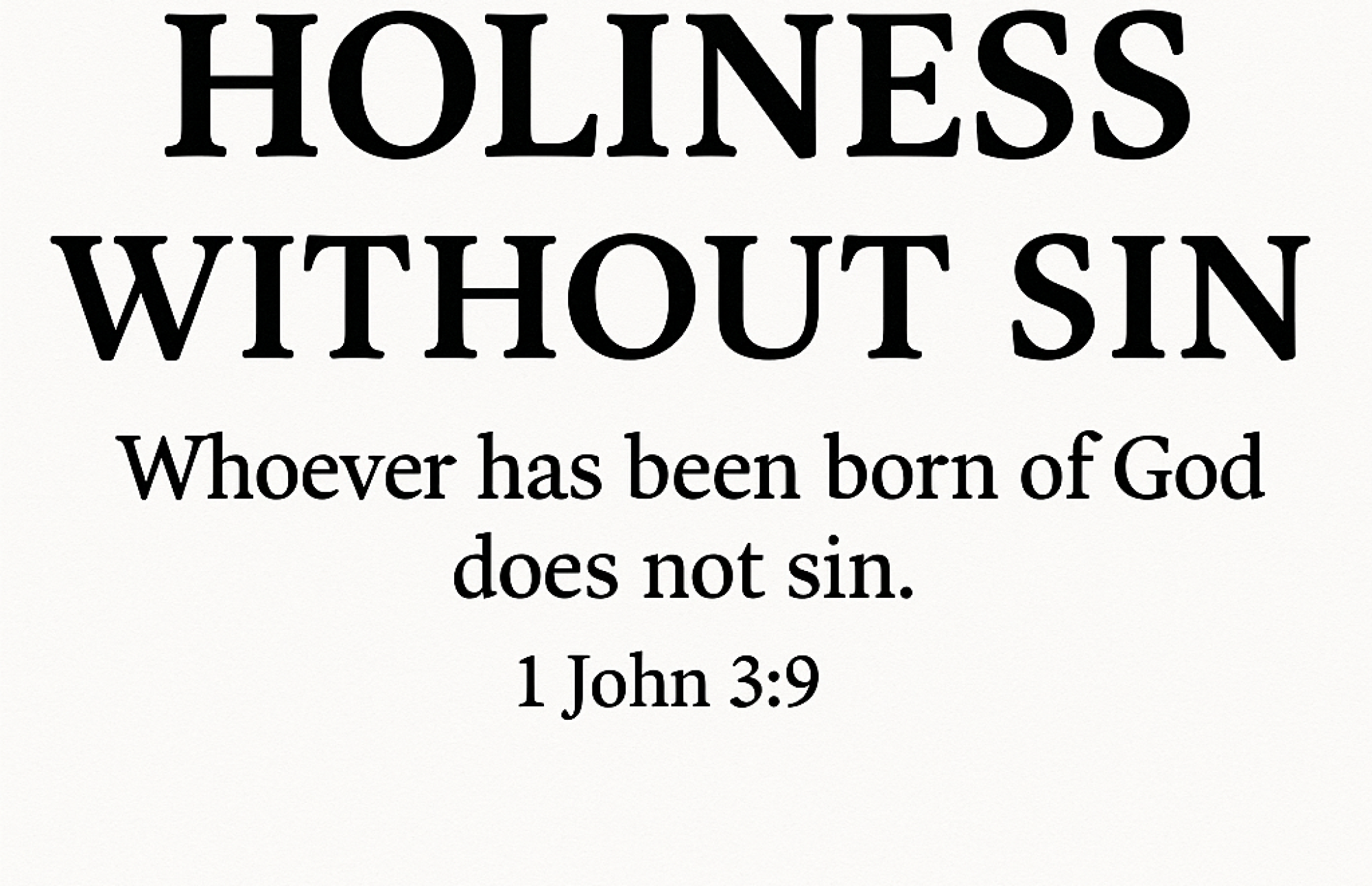
Ephesians 5:1–11 — Imitating God in Absolute Holiness
Ephesians 5:1–11 is one of the most radical and uncompromising passages in the New Testament. Paul does not call believers to a moderate or symbolic holiness, but to imitate God Himself. This command leaves no room for compromise.
“Therefore be imitators of God as beloved children.” (Ephesians 5:1)
To imitate God means to reflect His character, His purity, His moral perfection. This command perfectly aligns with the words of Jesus and Peter:
Matthew 5:48 — “Be perfect, as your heavenly Father is perfect.”
1 Peter 1:15–16 — “Be holy in all your conduct… Be holy, for I am holy.”
There is no ambiguity here.
To be holy, to be perfect, means to be without sin.
This is not symbolic holiness, but real, lived holiness.
No Room for Sin — Not Even Occasionally
Paul continues with a radical declaration:
“But sexual immorality and all impurity or covetousness must not even be named among you, as is proper among saints.” (Ephesians 5:3)
Not named.
Not practiced.
Not tolerated.
Not even occasionally.
This verse alone destroys the idea that a Christian may continue in occasional sin. If something must not even be named, then it certainly must not be practiced, justified, or normalized.
Paul goes further:
“Let there be no filthiness nor foolish talk nor crude joking, which are out of place.” (Ephesians 5:4)
Holiness touches speech, attitude, behavior, thoughts, and intentions.
Nothing impure is acceptable.
Nothing unclean is harmless.
A Clear Verdict on Salvation
Paul then states an absolute truth:
“For you may be sure of this, that everyone who is sexually immoral or impure, or who is covetous… has no inheritance in the kingdom of Christ and God.” (Ephesians 5:5)
This is not hypothetical.
This is not symbolic.
This is a final verdict.
Anyone who practices these things — even occasionally — does not inherit the Kingdom of God. Therefore, these sins cannot coexist with salvation.
Children of Light, Not of Darkness
Paul draws a sharp contrast:
“For at one time you were darkness, but now you are light in the Lord. Walk as children of light.” (Ephesians 5:8)
There is no mixture of light and darkness.
There is no partial holiness.
There is no shared territory.
To walk as a child of light means to live without sin, just as light has no fellowship with darkness.
“Take no part in the unfruitful works of darkness, but instead expose them.” (Ephesians 5:11)
Not participate.
Not excuse.
Not return to them — never.
The Final Standard Is Settled
This passage brings the debate to an end.
The Christian standard is not struggling sin, but victorious holiness.
As John confirms:
“Everyone who has this hope in Him purifies himself, just as He is pure.” (1 John 3:3)
And Jesus Himself taught us to pray:
“Your will be done on earth as it is in heaven.” (Matthew 6:10)
In heaven there is no sin.
No impurity.
No compromise.
No rebellion.
Therefore, God’s will on earth is the same: a life without sin.
Conclusion
Ephesians 5:1–11 does not allow a Christianity that tolerates occasional sin.
It commands a total separation from the old man, a new life, a pure walk, and a complete imitation of God.
No impurity.
No compromise.
No darkness.
Never sin.
This is not extremism.
This is biblical Christianity.